

The Rise of Content Creators: How Digital Mavericks Are Dominating the New Economy
In the digital era of today, attention is the new oil. It was the same way that nations once warred over oil fields and pipelines, today’s economy operates around grabbing user attention. And the greatest winners in this change are not the usual corporations, but content creators, people who create influence and profit from
it directly.
Over the last few decades, there has been a drastic shift in the way businesses are established and the way one earns money. Resources such as oil were once the ultimate sources of power. Nowadays, though, it’s not crude oil, but online-powered content that makes things successful. Even the oil companies now rely on websites for promotion, logistics, tracking data, and outreach. This change represents a paradigm shift in the way business value is being created in the 21st century.
The content creators economy previously populated by fashion vloggers and lifestyle influencers is now an end-to-end business ecosystem. Creators today aren’t merely content machines; they are entrepreneurs, teachers, consultants, community leaders, and investors. They don’t merely draw attention, they turn that attention into revenue, equity, and long-term brand value. Young minds are influencing today’s youth at the next level, they have a sheer number of followers which acts as their network and networth.
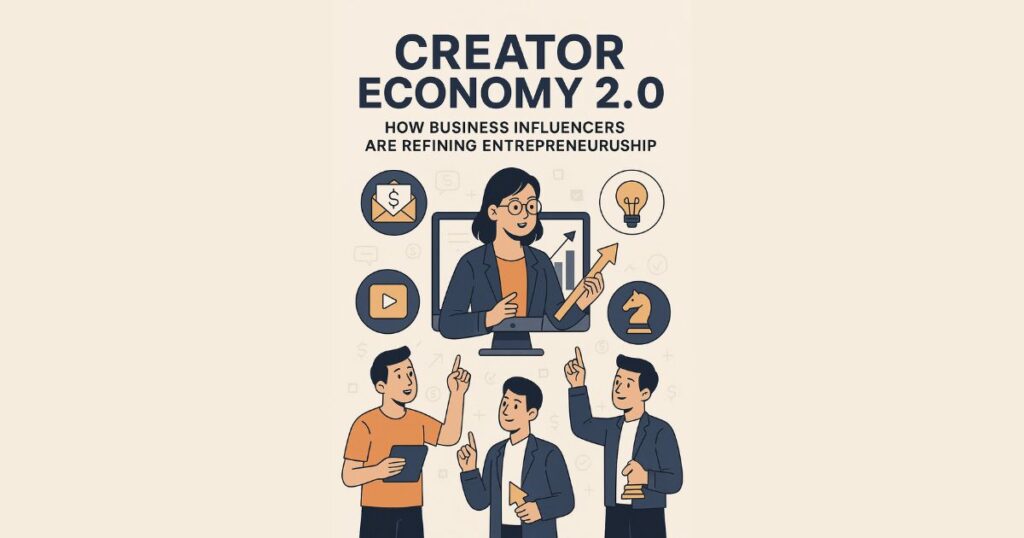
The Evolution of the Content Creators Economy
In order to know where we are now, it is important to see how the creator economy changed over time: let’s break into 3 important phases
● Phase-1 : The Age of Social Media Influence (2015–2020)
● Phase-2 : Pandemic Driven Monetization (2020–2024)
● Phase-3 : The Rise of Media-First Businesses (2024–2025)
2015–2020: The Age of Social Media Influence
This is the period when creators emerged as known personalities. (YouTube, Instagram, and Facebook) enabled people to post their stories, vlogs, tutorials, and entertainment for big crowds.
Creators like Bhuvan Bam and Lilly Singh became early stars, showing that a smartphone camera and creativity could build global reach. Influencer marketing was still young, but brands began investing in collaborations to reach millennial and GenZ users.
2020–2024: Pandemic-Driven Monetization
COVID-19 turned everything around. With people stuck at home and remote work becoming the norm, audiences went online. It has brought a complete medical emergency ,and life got stuck for a few months. In contrast to this, creators seized the moment to provide more than entertainment they started selling paid content.
Webinars, coaching online, online courses, paid newsletters, and Zoom events became the norm. Individuals began respecting creators not only as entertainers, but also as teachers and counselors. A LinkedIn content creator disseminating business tips could now profit from their expertise just like a university professor if not better.
This era also made work-from-anywhere lifestyles mainstream, allowing a global creator network to flourish on flexibility and digital productivity.
2024–2025: The Rise of Media-First Businesses
We’ve now entered a stage where creators are building entire businesses around their content. Platforms like LinkedIn, Substack, YouTube Podcasts, and Patreon are enabling creators to become brands. Influencers have moved from short-term promotions to long-term brand building. Business-focused creators are launching their own companies, raising investments, running podcasts, and hiring teams. They’re no longer just influencers they’re founders of media-first startups.
Even the content format has changed. YouTube videos are becoming long-form podcasts, and Instagram’s IGTV has turned into fast-paced, highly addictive Reels. Viewers crave both bite-sized bites and in-depth dives and creators are giving them both.
Now let’s understand Creator Economy 2.0 more deeply with the help of a case study.
Case Study: Raj Shamani – The Business of Influence
One of the most compelling examples of Creator Economy 2.0 is Raj Shamani. He started out assisting his father’s chemical company, but over time developed a personal brand by posting about his experiences and know-how online.
Today, Raj is among the most influential business figures in India. His work cuts across Instagram, YouTube, LinkedIn, and X (Twitter), where he discusses startups, discipline,motivation, self-improvement, and entrepreneurship. His podcast “Figuring Out” features notable entrepreneurs and celebrities and consistently gets millions of views.
Now content creation is not only about shooting videos and posting them on instagram or youtube but it’s all about presenting it at the right time. After Royal Challengers Bengaluru’s win in Tata IPL 2025, he launched a long 4 hours podcast with the founder of this franchise Vijay Mallya, he purchased RCB in 2008 but due to some financial crises, currently this is owned by Diageo (a british alcoholic beverages company).
So, these are the key elements like presenting the right content at the right time to attract the right audience which ultimately makes you a good content creator.
But what really makes Raj stand out is his diversified revenue model:
Brand collaborations with fintech and edtech companies
Podcast sponsorships with top brands
Online events and masterclasses
Startups and advisory work with an equity focus
He’s the best example of how content is no longer about attention, it’s about assets. Raj’s not producing for likes; he’s building an empire with influence as the foundation.
Raj Shamani’s journey is not just a success story, but an inspiration to many creators. From helping in his father’s small business to building a multi-platform personal brand that educates, inspires, and generates revenue,
Raj exemplifies how consistency, clarity of purpose, and the smart use of digital tools can create lasting impact. His is a tale of encouraging thousands to think that you can’t necessarily be born with influence to create it, you can work for it, one post, one podcast, and one bit of value at a time. In the constantly changing world of Creator Economy 2.0, Raj’s life is an embodiment of what can happen when passion and strategy collide.
The New-Age Business Model of Influencers
The modern influencer is, in essence, a media entrepreneur. Rather than being dependent on a single source of income such as ad revenue, they have multiple monetization avenues to tap into:
Digital Products: eBooks, online courses, templates
Paid Newsletters & Memberships: Access to a private community of fans
Brand Deals: Long-term partnerships and sponsored content
Startup Equity: Early-stage startup investments
Consulting & Speaking Engagements: Selling expertise worldwide. It generates income diversity and protects creators against platform volatility. Even if one income stream declines, others can sustain the business.
The Technology & AI Role
Perhaps one of the most thrilling Creator Economy 2.0 tools is Artificial
Intelligence. AI technology is now integrated into every step of content
creation, from scripting and editing to thumbnail design and analytics.
Tools such as (ChatGPT, Canva AI, Descript, and MidJourney) enable individual creators to create high-quality, multi-format content at breakneck speed. This cuts the requirement for big teams, allowing creators to remain
nimble and profitable. Additionally, AI analytics enable influencers to know what is working, when to
publish, and how to boost engagement converting gut feeling into data-informed strategy.
The Future: Micro-Niches, Community, and Ecosystems
As the space grows up, the most successful creators are going after hyper-niche areas and community-driven expansion. Rather than broadcasting to everyone, creators now address smaller but highly active groups.
A creator who assists solopreneurs in constructing Notion dashboards or money advice for Gen Z students might have fewer fans but greater conversion rates. This is making micro-influencing more lucrative than mass influence and creators are starting their own platforms.
Numerous creators are establishing personal websites, apps, or gated communities to lower dependence on algorithms and social media policies. They’re creating ecosystems: a blend of media, education, products, services, and community fueled by trust.
Why Does This Matters??
There is absolutely no difference between creator and entrepreneur . Business influencers are no longer side-hustlers. They’re creating empires, raising capital, releasing products, and shaping industries. With content as capital, community as currency, and technology as leverage, the Creator Economy 2.0 is here to stay. It is no longer a trend, it’s a way to access for modern entrepreneurship.
So, if you are a student, a freelancer, or a startup founder, understand the power of digital influence. The attention economy is real, and those who learn to play the game early will shape the future of business.
Disclaimer: The views expressed in this article are for informational purposes only and do not necessarily reflect the official policy or position of any organization. If you have concerns or believe there are factual inaccuracies, please write to us at info@primejournal.in or Contact Us.
Mohammad Ahmad
Mohammad Ahmad is a B.Com graduate with a passion for business management and technology. He currently contributes to Prime Journal as a content writer. Ahmad enjoys exploring the intersection of markets, management, and innovation. He once led a team in a national-level marketing competition, reflecting his interest in leadership and strategy.